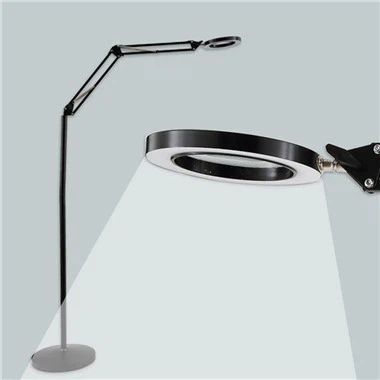
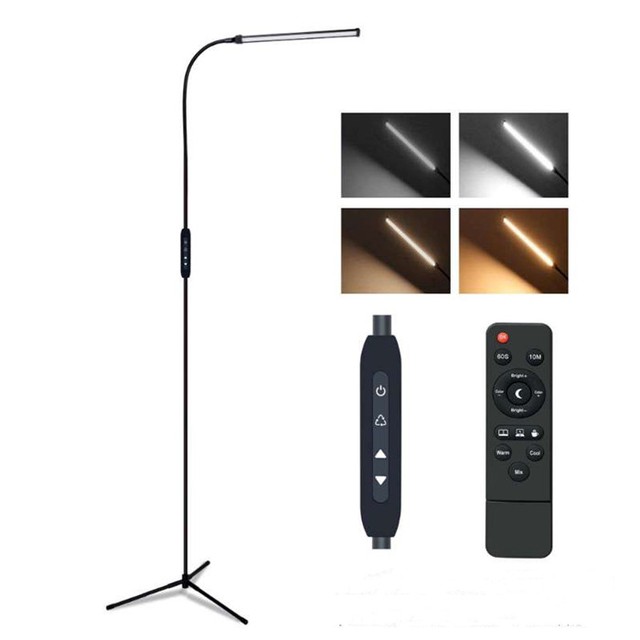
Q: What is a Floor Reading Light?
A: A floor reading light is a type of adjustable lamp that stands on the floor, typically near a chair or a couch, to provide focused illumination for reading or other close-up tasks. It usually has a flexible arm or neck that allows the user to direct the light exactly where needed.
Q: What are the benefits of using a floor reading light?
A: Floor reading lights offer several advantages, including portability, adjustability, and the ability to provide task-specific lighting without interfering with the ambient lighting of the room. They are also great for spaces where installing wall or ceiling fixtures may not be feasible.
Q: How do I choose the right floor reading light?
A: When selecting a floor reading light, consider the size of the space, the height of the furniture, the type of bulb (LED, incandescent, etc.), the intensity of the light, and whether you need additional features like a dimmer switch or an adjustable head.
Q: What features should I look for in a floor reading light?
A: Look for features like an adjustable stand, a pivoting head, a sturdy base, and an energy-efficient bulb. A built-in dimmer or switch can also be beneficial for controlling the brightness according to your preference.
Q: Are floor reading lights suitable for all rooms?
A: Floor reading lights are versatile and can be used in various rooms, including living rooms, bedrooms, offices, and even in some outdoor settings.
Q: Can floor reading lights be energy-efficient?
A: Yes, many floor reading lights are designed with energy efficiency in mind, using LED bulbs that consume less energy and last longer than traditional bulbs.
Q: How do I maintain my floor reading light?
A: Regular dusting and occasional cleaning of the light shade and base will keep your floor reading light in good condition. Ensure the bulb is replaced when necessary, and if the light has any moving parts, check them periodically for loose connections or wear.
Q: What is the typical lifespan of a floor reading light?
A: The lifespan of a floor reading light largely depends on the quality of the materials and construction. Well-made lamps can last for several years, while cheaper models may need replacing sooner.
Q: Can I use a floor reading light outdoors?
A: Some floor reading lights are designed to be weather-resistant and can be used outdoors, but this should be specified by the manufacturer. Always check the product details before using it outside.
Q: How do I determine the correct height for my floor reading light?
A: The height of the floor reading light should be adjusted so that the light source is at eye level when you are seated. This ensures that the light is directed onto the reading material without causing glare or strain.
Q: Can I use a floor reading light with a smart home system?
A: Yes, some floor reading lights come with smart capabilities that allow them to be integrated with smart home systems. This enables you to control the light remotely using voice commands or a smartphone app.
Q: What types of bulbs are commonly used in floor reading lights?
A: LED bulbs are the most common type due to their energy efficiency and long lifespan. However, some floor reading lights still use incandescent or halogen bulbs.
Q: Are there any health benefits associated with using a floor reading light?
A: Using a floor reading light that provides adequate illumination can help reduce eye strain and fatigue during prolonged periods of reading.
Q: Can I use a floor reading light for tasks other than reading?
A: Absolutely. Floor reading lights can be used for a variety of tasks, such as sewing, knitting, crafting, or even as a supplementary light source in a room.
Q: How do I know if a floor reading light is stable enough?
A: A stable floor reading light will have a wide and heavy base that prevents it from tipping over easily. Check the product specifications and customer reviews for stability information.
Q: Can I use a floor reading light with a power strip?
A: Yes, you can plug a floor reading light into a power strip, provided that the power strip has sufficient capacity and the correct type of outlet for the light's plug.
Q: What is the difference between a floor reading light and a floor lamp?
A: A floor reading light is specifically designed for providing task-specific lighting for activities like reading, whereas a floor lamp typically serves as a general source of ambient lighting.
Q: Can I adjust the direction of the light on a floor reading light?
A: Most floor reading lights have adjustable heads or arms that allow you to direct the light precisely where needed. This feature is essential for optimizing the lighting for your reading or task area.
Q: Can I use a floor reading light with a table lamp?
A: There is no reason why you cannot use both a floor reading light and a table lamp in the same room. Just ensure that the combined lighting provides adequate illumination for your needs without causing glare or discomfort.
Q: How do I choose the right color temperature for my floor reading light?
A: Color temperature is measured in Kelvin (K) and refers to the warmth or coolness of the light. For reading, a warm white light (around 2700K to 3000K) is generally recommended as it is easier on the eyes and creates a cozy atmosphere.